Skip to content
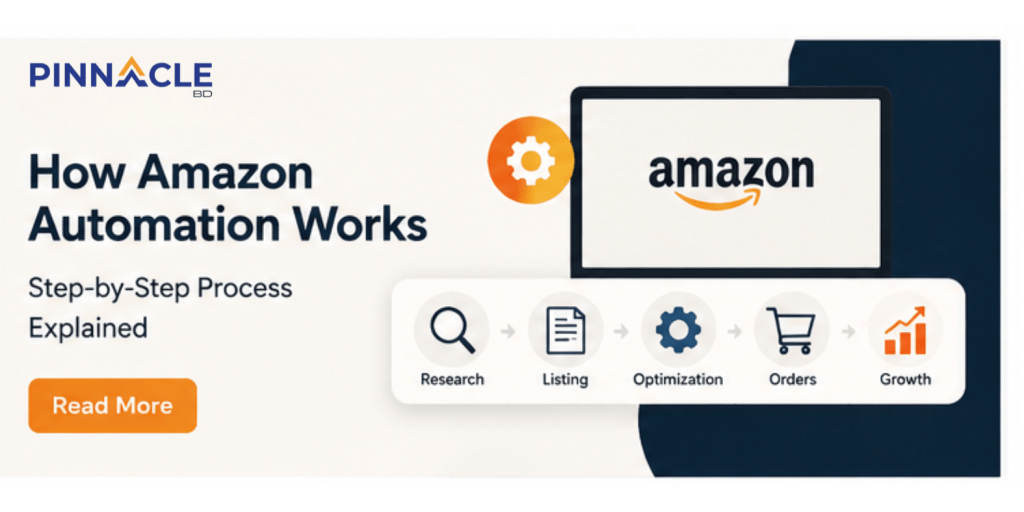
Amazon automation has become an increasingly popular solution for entrepreneurs who want to build an online business without managing every daily task themselves. Instead of handling product research, listings, inventory, and customer support alone, an experienced automation team manages these operations while you focus on growing your investment.
If you’re new to the concept, here’s a simple step-by-step guide to how Amazon automation works.
Step 1: Create an Amazon Seller Account
The first step is setting up an Amazon Seller Central account. This is where your products, orders, inventory, and business performance are managed. Depending on your goals, you may choose an Individual or Professional selling plan.
Once your account is verified, you’re ready to begin building your Amazon business.
Step 2: Product Research
Finding the right product is one of the most important parts of selling on Amazon. Automation experts use advanced research tools to identify products with strong demand, manageable competition, and healthy profit margins.
The goal is to select products that have the best chance of generating consistent sales while minimizing risks.
Step 3: Supplier Sourcing
After selecting a product, the next step is finding reliable suppliers. Your automation team researches manufacturers or wholesalers, compares pricing, evaluates product quality, and negotiates favorable terms.
Working with dependable suppliers helps maintain product quality and inventory availability.
Step 4: Product Listing Optimization
A well-optimized product listing can significantly improve visibility and conversions. This process includes:
- Writing SEO-friendly product titles
- Creating persuasive product descriptions
- Adding relevant keywords
- Uploading high-quality images
- Optimizing bullet points
- Selecting the correct product category
An optimized listing helps customers find your products more easily through Amazon search results.
Step 5: Inventory Management
Managing inventory is essential for maintaining sales. Automation systems monitor stock levels, forecast demand, and help prevent products from going out of stock or sitting in storage for too long.
Effective inventory management also helps reduce storage fees and improve cash flow.
Step 6: Order Fulfillment
If you’re using Amazon FBA, Amazon stores your products in its fulfillment centers. When a customer places an order, Amazon handles:
- Picking the product
- Packing the order
- Shipping to the customer
- Processing returns
- Providing customer support
This allows sellers to avoid managing warehouses or shipping logistics.
Step 7: Store Monitoring and Optimization
Successful Amazon businesses require continuous monitoring. Automation teams regularly review store performance by tracking sales, customer feedback, inventory levels, and listing performance.
They also make improvements such as updating product listings, adjusting pricing strategies, and optimizing inventory planning to support long-term growth.
Is Amazon Automation Completely Hands-Free?
Not entirely. While automation significantly reduces the day-to-day workload, business owners still play an important role. You may need to approve major business decisions, monitor financial performance, and ensure compliance with Amazon’s policies.
Think of automation as expert business management rather than a fully passive system.
Benefits of Amazon Automation
Using Amazon automation offers several advantages, including:
- Saves time on daily operations
- Access to experienced e-commerce professionals
- Better product research and listing optimization
- Efficient inventory management
- Simplified order fulfillment
- Greater opportunities to scale your business
These benefits can help entrepreneurs focus on strategic growth instead of routine operational tasks.
Final Thoughts
Amazon automation simplifies many of the complex tasks involved in running an online store. From product research and supplier sourcing to inventory management and order fulfillment, automation helps streamline operations while improving efficiency.
Although success still requires planning, investment, and ongoing involvement, partnering with a trusted Amazon automation agency can help reduce operational challenges and position your business for sustainable long-term growth.